Most people meet the idea of junk removal at a moment of overload. A garage that no longer fits a car, a shed full of broken tools, a living room still holding the furniture of a previous decade. The job of getting rid of unwanted items sounds simple, but it quietly involves logistics, safety, sorting, and a surprising number of rules about where things are allowed to go. A couch, a refrigerator, and a pile of tree limbs all follow different paths once they leave a property.
This article explains how Junk Removal Service Tigard works as a process, from the first walk-through to the final destination of each item. It explains how items are categorized, what happens to them after they leave, why some things are treated as special cases, and how conditions in Tigard and the broader Portland area shape the work. It is written as general, practical information for readers who want to understand the system rather than decide on any particular course of action.
What the Term Actually Covers
Junk removal is the collection and transport of unwanted household or property items that are too bulky, too numerous, or too unusual for regular garbage service. The word junk is a bit unfair, because a good share of what gets removed is still functional or recoverable. A better description would be unwanted items, since one person’s junk is often another person’s useful furniture.
The category is broad. It includes furniture, appliances, mattresses, exercise equipment, old electronics, yard waste, scrap metal, flooring, fencing, small sheds and playsets, boxes of accumulated belongings, and the miscellaneous leftovers of moves and renovations.
What ties these items together is not what they are but how they behave in the waste system. They do not fit in a standard cart, they often have weight or shape problems, and many of them have a better destination than a landfill if they are handled thoughtfully.
The Stages of a Removal
Although every property is different, the process tends to follow a recognizable sequence.
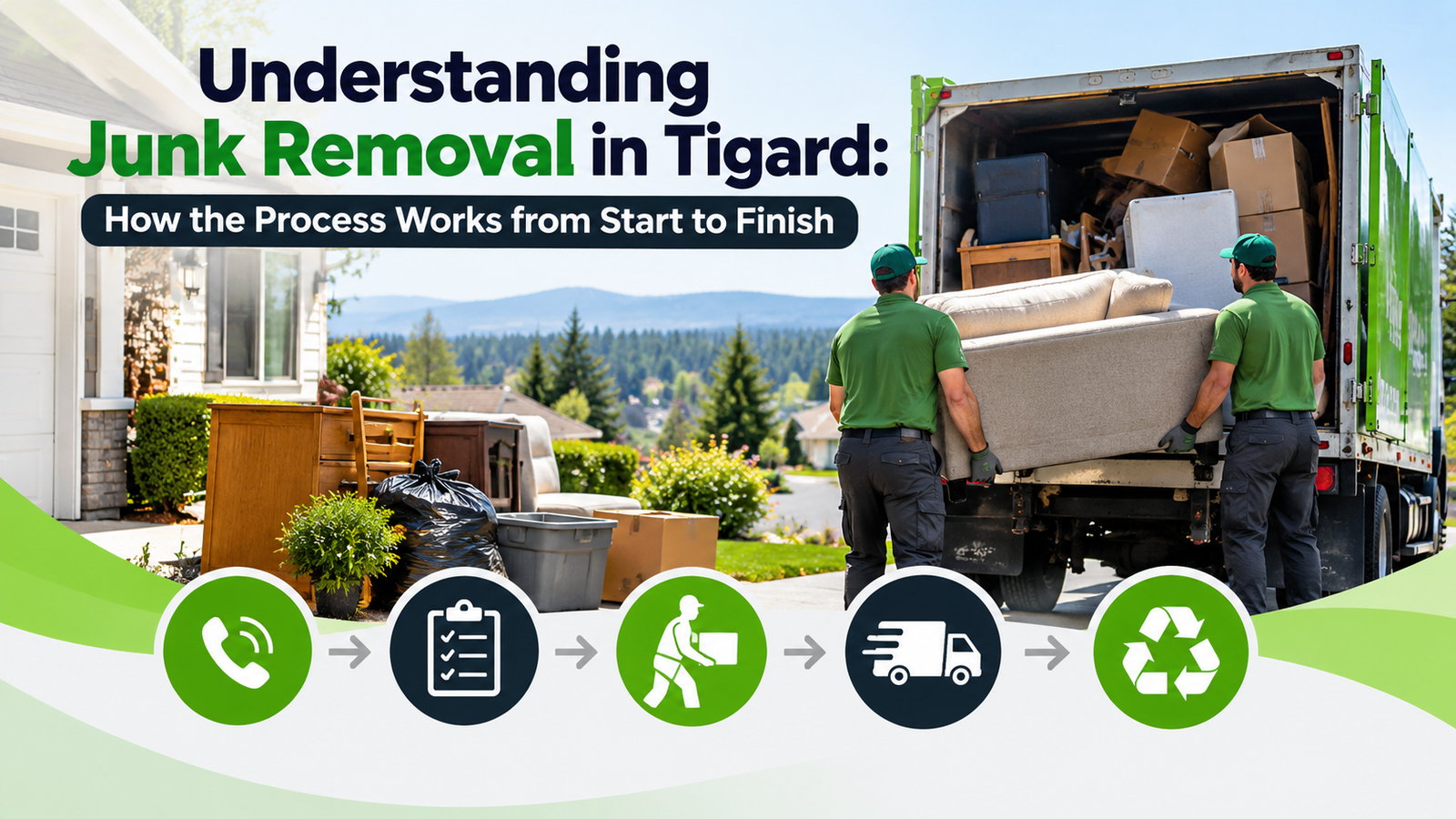
Assessment. The first step is understanding what is there. How much material is involved, where it sits, how it can be reached, and whether anything requires special handling. A pile in a driveway is a different problem from a basement full of boxes reached by a narrow staircase.
Sorting. Items are grouped by likely destination. Reusable furniture, scrap metal, electronics, hazardous products, yard debris, and true trash are separated as early as possible. Sorting at the beginning saves time later and increases the share that can be diverted from landfill.
Loading. Items are carried out and placed in a truck or trailer. Heavy and awkward pieces require coordination, and protection for floors, walls, doorways, and landscaping is part of careful work.
Transport. The load travels to one or more destinations. A single trip may include a stop at a donation center, a scrap yard, a recycling facility, and a transfer station.
Processing. At each destination, the material is weighed, inspected, and directed into its own stream. Usable goods go to resale or donation, metals go to scrap processors, electronics go to certified recyclers, and the remainder goes to disposal.
Final cleanup. The area where the items were stored is swept and checked so that nothing is left behind.
Understanding these stages makes it easier to see why some items are accepted without any fuss while others need separate arrangements.
How Items Are Classified
Classification drives almost everything about how an item is handled. A rough guide looks like this.
| Category | Examples | Typical destination |
|---|---|---|
| Reusable goods | Working furniture, tools, housewares, bicycles | Donation or resale |
| Scrap metal | Metal shelving, bed frames, grills, old pipe | Scrap yard for melting and reuse |
| Appliances | Washers, dryers, stoves, refrigerators | Scrap processing, with refrigerant recovery where needed |
| Electronics | Televisions, computers, printers | Certified electronics recycling |
| Mattresses | Mattresses and box springs | Mattress recycling programs |
| Yard material | Brush, branches, fencing, old decking | Composting, chipping, or mixed disposal |
| Construction leftovers | Lumber, drywall, flooring | Materials recovery facilities |
| Hazardous products | Paint, chemicals, fuels, batteries | Hazardous waste collection |
| General waste | Broken, soiled, or unusable items | Transfer station and landfill |
This is why a well-organized removal can look like several small deliveries rather than a single trip to a dump.
Why Reuse Comes First
In waste management, reuse is considered the best outcome because it uses no new energy or raw materials. A sofa that still has years of life left saves the resources that would be needed to build a new one, and it avoids the processing and transportation of waste.
The Portland metropolitan area has a deep network of reuse organizations, thrift stores, and building material exchanges. These groups accept a wide range of goods in good condition, though their standards vary. Items that are clean, intact, and functional have the best chance. Items that are stained, broken, moldy, or contaminated generally do not qualify, and that is not a judgment but a practical constraint, since those organizations need to be able to resell what they accept.
Some categories are rarely accepted at all for health or safety reasons. Used mattresses, for example, are typically not resold, and items like car seats and cribs are subject to safety standards that make second-hand reuse more complicated.
Recycling and Processing Behind the Scenes
When reuse is not possible, the next best option is recycling. Several distinct recycling systems are involved in a typical removal.
Metal. Scrap yards weigh and sort metals by type. Steel, aluminum, copper, and brass are separated, shredded or baled, and sold to mills. Metal recycling is one of the oldest and most reliable markets, and it keeps a very high percentage of metal items out of landfills.
Electronics. Televisions, monitors, and computers contain valuable metals, and also hazardous components like lead and mercury. Oregon’s E-Cycles program provides a free path for these items, run by manufacturers rather than local governments.
Mattresses. Oregon has a statewide stewardship program for mattress recycling. Mattresses are taken apart, and the steel springs, foam, and fabric are recovered separately.
Appliances. After refrigerants are properly removed from units that contain them, appliances are shredded and the metal is recycled.
Wood and yard material. Clean wood and brush can be chipped for mulch, compost feedstock, or biomass fuel.
The result is that a thoughtfully handled load can send most of its content to something other than a landfill.
Items That Require Special Handling
Certain items cannot go into ordinary loads because they are dangerous or regulated.
- Hazardous liquids and chemicals. Paint, solvents, pesticides, pool chemicals, motor oil, and fuels.
- Propane tanks and compressed gas cylinders. These can explode if crushed or heated.
- Batteries. Lithium-ion batteries can ignite, and other batteries contain heavy metals.
- Fluorescent bulbs. They contain small amounts of mercury.
- Medical waste and sharps. These require specialized disposal to protect workers.
- Asbestos-containing materials. Older insulation, flooring, and siding may contain asbestos and are regulated.
- Refrigerant-containing appliances. Refrigerants are regulated under federal law and must be recovered by certified methods.
Knowing about these categories ahead of time is useful for anyone preparing items, since hiding a can of old paint in a box of other goods creates risk for everyone downstream.
Preparing a Space for Removal
Whether the work involves a single item or an entire property, a little preparation makes everything smoother.
- Decide what stays. Walk through and mark items that should remain. Clear decisions prevent accidental removal of things that matter.
- Separate valuables and paperwork. Documents, jewelry, photographs, and keepsakes should be set aside before the work begins.
- Empty containers. Drawers, dressers, and storage bins often hold forgotten items. Removing contents lightens loads and prevents accidents.
- Clear pathways. Open doors, move obstacles, and make sure stairs and halls are free of tripping hazards.
- Identify special items. Set aside anything that falls into a hazardous or regulated category so it can be handled correctly.
- Protect the property. Note fragile floors, narrow doorways, and landscaping that needs protection.
- Disconnect appliances. Washers, dryers, and refrigerators should be unplugged, drained, and emptied in advance when possible.
This simple routine reduces the time and risk involved, and it helps ensure that nothing of value is lost in the shuffle.
Common Situations That Lead to Removal
People encounter the need for removal in many contexts, and the character of the work changes with each.
Moving. Households about to relocate often discover how much has accumulated. Items that are not worth packing and moving need to find another destination.
Downsizing. Moving to a smaller home or a care facility usually means reducing possessions significantly. These situations carry emotional weight, and decisions about sentimental items take time.
Estate settlement. After a family member passes away, the home must be sorted, and valuables and documents should be identified before removal begins.
Renovation and remodeling. Old fixtures, cabinets, and flooring need to leave before new ones arrive, though construction debris is handled differently from household junk.
Rental turnover. Landlords and tenants sometimes need to clear a property between occupants, including items left behind.
Storm and seasonal cleanup. Windstorms and winter weather in the Pacific Northwest often leave branches, fencing, and damaged structures that need to be moved.
Decluttering. Some people simply decide to reclaim a garage, basement, or storage space.
Tigard-Specific Considerations
Tigard is a suburban city of established neighborhoods, newer developments, apartment communities, and commercial corridors. Several local features influence how removal is organized.
Housing variety. Tigard includes single-family homes, townhouses, condominiums, and apartment complexes. Each has different access conditions. Apartments with stairs or narrow breezeways require more labor, while homes with driveways allow direct loading.
Homeowner and community rules. Many neighborhoods have associations with rules about visible debris, parking of large vehicles, and work hours. Planning around these rules avoids conflicts.
Hills and driveways. Parts of Tigard, including areas toward Bull Mountain, are hilly, with steep or curved driveways that affect vehicle access.
Wet weather. The rainy season soaks furniture, cardboard, and upholstered items quickly, turning reusable goods into unusable ones. Items left outside for even a few days in winter can become heavy and damaged.
Tree-heavy lots. Many Tigard properties have mature trees, and storms often leave branches and limbs that exceed the capacity of yard debris carts.
Proximity to major routes. Highway 99W, Interstate 5, and Highway 217 make it relatively easy to reach regional recycling and disposal facilities, and Metro’s facilities in the broader area serve as important destinations for waste and recovered materials.
Environmental sensitivity. Fanno Creek and nearby waterways make proper disposal particularly important. Dumping or leaving debris near drainage areas can contaminate local waters.
Safety During Removal
Hauling and loading involve real physical risk, and certain practices are consistently important.
- Lift with the legs, not the back, and share heavy loads.
- Wear sturdy gloves and closed shoes to protect against splinters, nails, and sharp metal.
- Check furniture and boxes for hidden items such as glass, needles, or chemicals.
- Protect floors, walls, and door frames from scuffs.
- Secure loads so nothing shifts or falls onto the road.
- Keep children and pets away from the work area.
- Take breaks, especially in summer heat.
Careful work protects both the people involved and the property they are working around.
Common Misunderstandings
“Everything goes straight to the landfill.” In practice, many items are diverted to reuse and recycling when they are sorted.
“Anything can be taken away.” Hazardous products, certain batteries, and some regulated items cannot be mixed into ordinary loads.
“Old items have no value.” Furniture, tools, appliances, and metals often have a second life or at least a recycling value.
“Leaving items by the curb is the same as disposal.” Items placed at the curb without arrangement can violate local rules, be damaged by weather, or be treated as illegal dumping.
“Wet or moldy furniture can still be donated.” Water-damaged items are generally not accepted because of hygiene concerns.
Frequently Asked Questions
What is junk removal?
It is the process of collecting and transporting unwanted items such as furniture, appliances, and debris and delivering them to appropriate destinations for reuse, recycling, or disposal.
What kinds of items are commonly removed?
Furniture, mattresses, appliances, electronics, yard debris, scrap metal, and general clutter from garages, basements, and storage spaces are the most typical items.
What cannot be included in a normal load?
Hazardous chemicals, propane tanks, certain batteries, medical waste, asbestos materials, and refrigerant-containing appliances usually require separate handling.
Where do removed items go?
Usable items may be donated, metals go to scrap yards, electronics and mattresses go to specialized recyclers, and the remainder goes to a transfer station and landfill.
Can furniture in poor condition be donated?
Generally not. Donation organizations typically accept items that are clean, intact, and safe to use. Damaged or soiled items are usually recycled or disposed of.
How is a load measured?
Loads are typically measured by volume in cubic yards and by weight at disposal facilities. Heavy items like concrete and soil can exceed weight limits even in small volumes.
How does weather affect removal in Tigard?
Rain adds weight, damages reusable items, and can make driveways and lawns slippery. Dry weather makes loading easier and protects items intended for reuse.
Why is it important to separate hazardous items first?
Hazardous products can leak, ignite, or injure workers if mixed with ordinary debris. Separating them ensures they reach the correct facility safely.
Final Thoughts
Junk removal is more than a pickup and a drop-off. It is a small logistics chain that sorts a pile of unwanted items into reusable goods, recyclable materials, special-handling products, and true waste. Each category has its own destination and its own rules, and the quality of the outcome depends on how carefully the sorting is done.
For anyone trying to understand how a junk removal service in Tigard works behind the scenes, the key ideas are straightforward. Separate the things that need special treatment, look for reuse before disposal, keep an eye on safety, and remember that local conditions like rain, hills, and nearby waterways affect how the work is carried out. A well-handled removal does not just clear space. It sends each item to the place where it will do the least harm and, whenever possible, the most good.